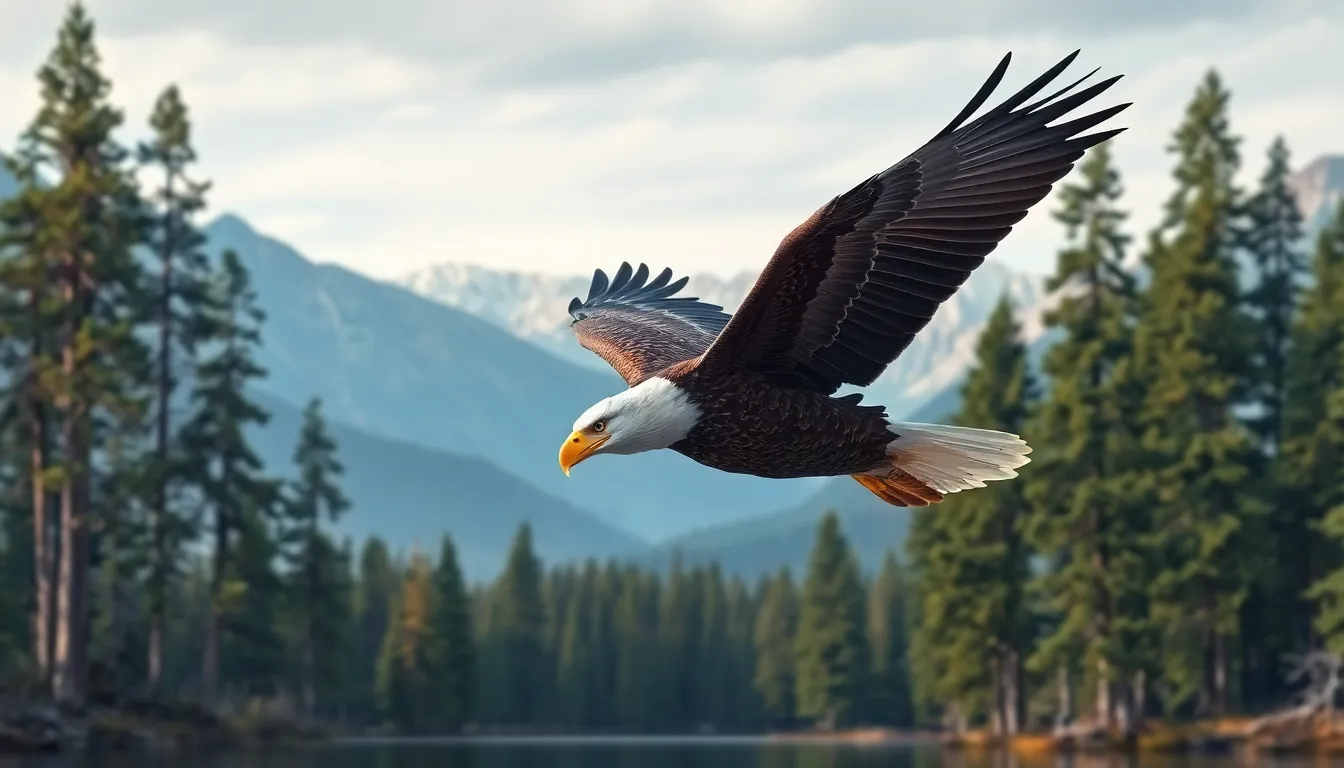
Bald eagles are the rock stars of the avian world, soaring majestically across North America with their stunning white heads and fierce yellow beaks. But where do these magnificent birds call home? If you’ve ever wondered where to catch a glimpse of these national treasures, you’re in for a treat.
From the icy shores of Alaska to the sunny lakes of Florida, bald eagles thrive in diverse habitats. They prefer areas near large bodies of water, where they can fish to their heart’s content. So, grab your binoculars and get ready for an adventure that might just have you feeling like a wildlife photographer—minus the camo gear and the awkward crouching! Whether you’re a nature lover or just someone who appreciates a good feathered friend, discovering the bald eagle’s habitat is sure to be an eye-opening experience.
Table of Contents
ToggleOverview of Bald Eagles
Bald eagles represent a symbol of strength and freedom in North America. Their population spreads across the continent, inhabiting regions from Alaska’s coastal areas to Florida’s freshwater lakes. These birds thrive near large bodies of water, as they rely heavily on fish for sustenance.
Preferred habitats include rivers, lakes, and marshes where fish are abundant. Additionally, trees serve as essential perches for hunting and nesting. Being adaptable, bald eagles can also be found in urban areas, provided they have access to suitable foraging sites. They often nest in large trees, typically towering over water to maintain a strategic advantage.
Bald eagles primarily migrate between breeding and wintering areas. For example, northern populations often fly south to find open water during winter months. They’re known to return to the same nesting sites year after year, showcasing a strong attachment to their territories.
The species plays a critical role in the ecosystem, often indicating the health of the environment. Areas with healthy populations of bald eagles generally exhibit clean waterways and abundant fish stocks. This connection to water resources makes the conservation of their habitats crucial to their survival.
Overall, bald eagles embody the spirit of their environments. Their majestic appearance and behavior continue to captivate observers across North America, making them a favorite subject for bird watchers and photographers.
Habitat Preferences
Bald eagles exhibit distinct habitat preferences that optimize their survival and hunting success.
Geographic Range
Bald eagles inhabit various regions across North America. They thrive in areas from Alaska and Canada to parts of the contiguous United States, extending down to Mexico. This geographic range reflects their adaptability to diverse climates and ecosystems. Research indicates that populations are especially dense in the Pacific Northwest and Florida, where suitable habitats are abundant. Nesting sites often include environments near large bodies of water, contributing to their presence in these areas. Understanding this geographic distribution highlights the importance of regional conservation efforts to protect their habitats.
Natural Habitats
Bald eagles prefer environments rich in aquatic ecosystems. They commonly inhabit rivers, lakes, marshes, and coastal areas where fish populations are high. Nesting occurs in large trees, offering vantage points for hunting and protection from predators. In urban settings, they adapt to areas with artificial water bodies that support fish life. Trees near these bodies of water provide the ideal nesting sites. This affinity for specific natural habitats underscores their role as top predators and indicators of ecosystem health. By preserving these habitats, conservation efforts play a critical part in supporting bald eagle populations.
Specific Locations Where Bald Eagles Are Found
Bald eagles inhabit diverse locations across North America, favoring regions close to abundant water sources. These majestic birds thrive in settings that offer ample fishing opportunities.
North America
In North America, bald eagles find refuge in various climates and landscapes. Populations concentrate around coastal areas, lakes, rivers, and marshes, emphasizing their preference for aquatic habitats. Migratory patterns allow them to expand their range, especially during winter months, when they travel to warmer regions in search of food. Nesting sites often consist of large trees, which provide safety and vantage points. Such diversity in habitats showcases their adaptability across the continent.
Alaska and Canada
Alaska and Canada represent significant strongholds for bald eagle populations. The frigid waters teem with fish, creating ideal foraging conditions. Coastal environments and river systems serve as vital nesting and feeding zones. Areas like the Kenai Peninsula and Prince William Sound in Alaska feature concentration of nests, while British Columbia offers ample habitat as well. Eagles in these regions often engage in communal roosting during winter months, highlighting their social behaviors in large numbers.
Continental United States
Within the continental United States, bald eagles flourish in various ecosystems from the Great Lakes to the Gulf of Mexico. The Pacific Northwest houses dense populations, supported by the abundance of salmon in local rivers. Florida’s wetlands provide critical habitat, attracting eagles to its vast lakes and marshes. Urban areas also host bald eagles, as they adapt to forage near man-made water sources. Implementing effective conservation strategies across these regions supports the thriving populations of these iconic birds.
Seasonal Migration Patterns
Bald eagles exhibit distinct seasonal migration patterns, adapting to changing environments. They migrate between breeding and wintering sites annually, often returning to the same locations.
Breeding Grounds
During the breeding season, bald eagles prefer open areas near large bodies of water. They commonly choose northern regions like Alaska and Canada, where abundant prey allows successful nesting. Nesting typically occurs in large coniferous trees, providing safety from predators. Areas along the Great Lakes and the Pacific Northwest also serve as prime breeding grounds, ensuring access to fish-rich habitats.
Wintering Locations
In winter, bald eagles migrate south to find milder climates and open water for hunting. Coastal regions like Florida and the Gulf of Mexico attract substantial populations, offering plentiful fishing opportunities. The landscape of the Chesapeake Bay draws eagles as well, with its extensive waters and suitable roosting sites. Urban areas near large lakes also serve as winter refuges, showcasing the adaptability of bald eagles to human-altered environments.
Conservation Status
Bald eagles experienced significant population declines throughout the 20th century due to habitat loss, hunting, and pesticide use, particularly DDT. The enforcement of the Bald and Golden Eagle Protection Act in 1940 and the subsequent banning of DDT in the 1970s contributed to their recovery. Conservation efforts have emphasized protecting their nesting sites and improving habitat quality across North America.
In 2007, the U.S. Department of the Interior removed the bald eagle from the Endangered Species list, recognizing more than 300,000 individuals in the wild. Active management strategies, such as habitat restoration and monitoring programs, support continued population growth. Collaborative efforts among federal, state, and local agencies ensure long-term protection of bald eagles’ environments.
Some regions, including the Pacific Northwest and Florida, boast thriving populations due to robust conservation initiatives. Despite these successes, challenges remain as habitat encroachment and environmental pollution could threaten their future. Researchers actively study the ongoing impacts of climate change on prey availability and nesting success, stressing the need for adaptive management strategies.
Awareness campaigns educate communities on the importance of protecting bald eagle habitats. Preserving large trees near water bodies is vital for successful nesting and foraging. Citizens can report sightings of nesting eagles or suspicious activity, contributing to ongoing conservation efforts.
Throughout North America, bald eagles serve as indicators of ecosystem health. Their resurgence showcases successful conservation measures while highlighting the importance of maintaining biodiversity. Long-term monitoring and research will ensure these iconic birds continue to thrive in their natural habitats.
Bald eagles embody the spirit of North America with their impressive presence and adaptability. Their preference for habitats near water highlights their role as vital predators within ecosystems. As they continue to thrive across diverse landscapes from Alaska to Florida, ongoing conservation efforts remain crucial for their future.
While the recovery of bald eagle populations is a success story, challenges like habitat loss and climate change persist. Protecting their nesting sites and educating communities about their significance will ensure these majestic birds continue to soar in the skies. Observing bald eagles in their natural habitats offers a unique opportunity to appreciate their beauty and the importance of preserving the environments they depend on.